Home / Jaw Fractures
Drop Your Number here
Jaw fractures, also known as mandibular or maxillary fractures, are common facial injuries that may result from road accidents, sports injuries, falls, or physical assault. They can cause pain, misalignment of teeth, difficulty in chewing, speaking, and even breathing problems.
Timely diagnosis and expert surgical management are essential to restore jaw function, facial symmetry, and oral health.
What We Do
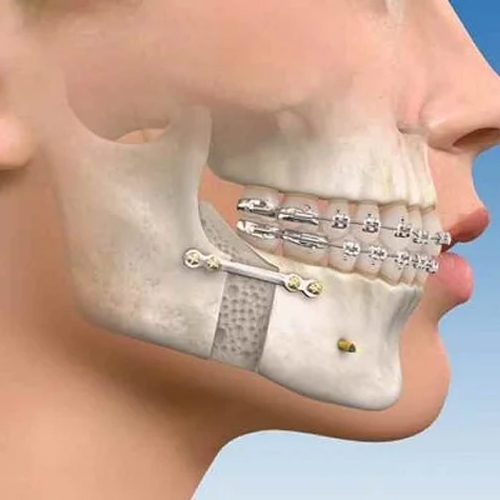
Our maxillofacial surgical team specializes in the accurate diagnosis and reconstruction of jaw fractures. We offer both closed reduction (wiring) and open reduction with internal fixation (ORIF) techniques using titanium plates and screws to ensure stable healing and function.
Types of Jaw Fractures Treated
Mandibular Fracture – Lower jaw (common sites: angle, body, condyle, symphysis)
Maxillary Fracture – Upper jaw; may involve midface or sinus walls
Condylar Fracture – Affects jaw joint and facial movement
Zygomaticomaxillary Complex (ZMC) Fracture – Involving cheekbone and orbit
Panfacial Fractures – Involving multiple facial bones including the jaw
Symptoms of a Jaw Fracture
Pain, swelling, and bruising around the jaw
Difficulty in opening the mouth
Misaligned bite or shifting teeth
Numbness in the lower lip or chin
Bleeding from the mouth or gums
Difficulty in speaking or chewing
Treatment Options
Closed Reduction – Non-surgical method using wires or elastic bands
Open Reduction & Internal Fixation (ORIF) – Surgical repositioning with titanium plates and screws
Tooth Management – Saving or removing teeth involved in the fracture line
Post-operative physiotherapy – For jaw movement and muscle rehabilitation
Benefits of Expert Surgical Management
Restores jaw stability and alignment
Improves chewing, speech, and breathing
Prevents long-term complications like malocclusion or TMJ disorders
Enhances facial aesthetics and symmetry
Shortens recovery time with modern fixation techniques
Risks & Considerations
Infection or delayed healing if not treated properly
Nerve damage (rare) leading to temporary numbness
Risk of malunion or non-union in complex fractures
Need for secondary surgery in some cases
Recovery & Aftercare
Post-surgery, patients may require a liquid/soft diet, pain management, antibiotics, and oral hygiene precautions. Full recovery usually takes 4–6 weeks, depending on the severity of the fracture.