Home / Hyposaodias
Drop Your Number here
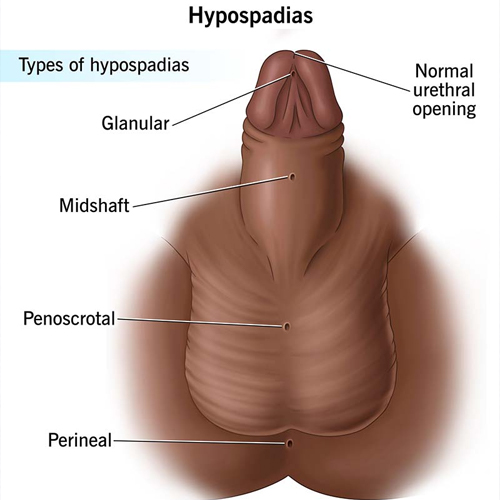
Hypospadias is a congenital condition in males where the opening of the urethra (urine passage) is located on the underside of the penis instead of at the tip. This may be associated with penile curvature (chordee) and an abnormal foreskin.
Surgical correction of hypospadias is essential to restore normal urination, enable future sexual function, and achieve a natural appearance.
Depending on the location of the urethral opening, hypospadias is classified into:
Distal (mild): Near the head of the penis
Midshaft: Along the shaft of the penis
Proximal (severe): Near the base of the penis or in the scrotum
Each type may vary in complexity and surgical approach.
Ideal age: Between 6–18 months of age
Can also be performed in older children or adults
One-stage or two-stage surgery, depending on severity
Early surgery helps avoid psychological impact and promotes better healing.
Create a functioning urethra that opens at the tip
Correct any penile curvature
Achieve a natural appearance
Allow the child to urinate standing up
Preserve or enhance future sexual and reproductive function
Various techniques are used depending on severity, including:
Tubularized Incised Plate (TIP) Repair (Snodgrass technique)
Onlay Flap Urethroplasty
Two-stage Urethroplasty for severe or redo cases
Chordee correction
Preputial or buccal mucosa grafts in complex cases
All procedures aim to achieve both functional and cosmetic success.
Catheter or stent may be placed temporarily
Mild swelling or discomfort may occur initially
Activity restrictions for a few weeks
Regular follow-ups to monitor healing and function
Fistula (urine leakage from abnormal opening)
Stricture (narrowing of new urethra)
Meatal stenosis (narrowing of urethral opening)
Cosmetic concerns or residual curvature
These can often be corrected with minor revision surgery if needed.
Dedicated expertise in pediatric and reconstructive urology
Use of modern, minimally invasive surgical techniques
High success rates with natural appearance
Compassionate care with child-friendly environment
Long-term follow-up for growth and function