Home / Genio Plasty
Drop Your Number here
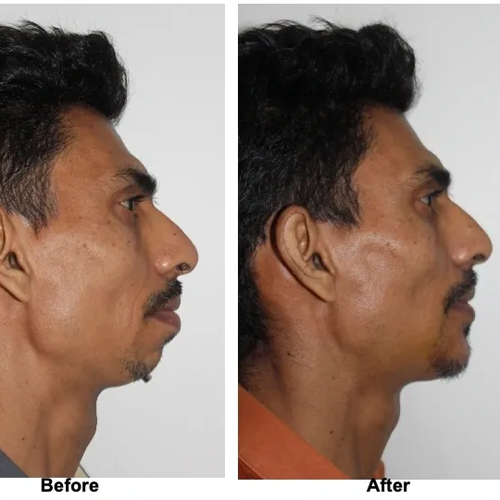
Genioplasty, also known as chin augmentation or chin reduction surgery, is a cosmetic and functional procedure that reshapes the chin bone (mandibular symphysis) to improve facial harmony, jawline definition, and profile aesthetics. It is often performed when someone has a receding chin, overly prominent chin, or asymmetrical chin.
Unlike chin implants, genioplasty involves surgically repositioning your own bone, making it a more natural and stable option — especially for those also undergoing orthognathic (jaw) surgery.
What We Do
We perform two main types of genioplasty procedures:
Advancement Genioplasty – For small or receding chins (moves chin forward)
Reduction Genioplasty – For long, projecting, or broad chins (removes excess bone)
In some cases, we also do vertical shortening or lengthening, or correct chin asymmetry.
Our approach involves detailed facial analysis, cephalometric measurements, and 3D planning to ensure optimal results that complement your facial proportions.
Who Needs Genioplasty?
People with a weak or receding chin
Individuals with a bulky, broad, or protruding chin
Patients with facial imbalance or jaw disproportions
Those who want a better jawline contour or side profile
Candidates for orthognathic surgery who need chin correction for symmetry
Benefits of Genioplasty
Improves facial aesthetics and profile balance
Enhances jawline sharpness and lower face definition
Corrects asymmetry or chin deviation
Natural results using your own bone
Can help improve airway space (in select cases)
Surgical Process
Pre-surgical planning with facial imaging and X-rays
Surgery under local or general anesthesia
Small incision inside the lower lip (no visible scars)
Bone cut (sliding osteotomy), repositioned and fixed with mini plates
Stitches inside the mouth — no scar on the face
Recovery & Aftercare
Mild swelling and numbness for 1–2 weeks
Resume normal routine in 7–10 days
Full healing in 6–8 weeks
Soft diet and good oral hygiene recommended
Risks & Considerations
Temporary numbness in the chin or lower lip
Rare risk of infection or bone relapse
Minor asymmetry may require touch-up (rare)